
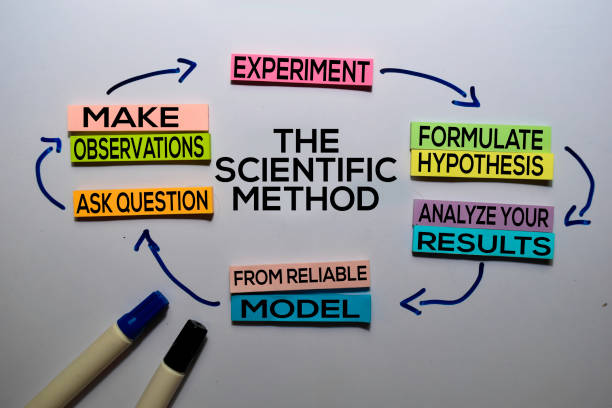
Coursework writing plays a crucial role in academic development, allowing students to demonstrate their understanding of a subject through structured research and practical analysis. Among the diverse writing approaches, experimental coursework writing methods stand out for their emphasis on innovation, critical inquiry, and data-driven learning. These methods push students beyond theoretical learning and encourage hands-on exploration skills essential for modern academic success.
This article explores the fundamentals, structure, and techniques behind experimental coursework writing. It also discusses how these methods foster creativity and precision, helping students produce well-researched, high quality academic work.
Understanding Experimental Coursework Writing
Online Physics Coursework Help
Experimental coursework writing revolves around designing, conducting, and analyzing experiments to test hypotheses or investigate real-world phenomena. Unlike traditional coursework that focuses primarily on literature review or theoretical interpretation, this approach integrates both conceptual understanding and practical application.
In disciplines such as science, psychology, and engineering, experimental coursework enables students to develop analytical thinking and empirical reasoning. For instance, a physics student might design a small-scale experiment to observe wave interference or measure light refraction in different mediums. Through structured documentation, they learn how to interpret results and evaluate outcomes based on experimental evidence.
The beauty of experimental coursework lies in its adaptability. It encourages students to combine creative thinking with technical precision. Whether the goal is to test a hypothesis, compare variables, or explore a new concept, the process helps develop critical academic skills such as hypothesis formulation, data analysis, and interpretation that are invaluable for higher-level research.
Key Components of Experimental Coursework Writing
To craft an effective experimental coursework paper, students must follow a clear and logical structure. Each component serves a specific purpose, ensuring the coursework maintains academic integrity and clarity.
1. Title and Abstract
A well-formulated title should be concise yet descriptive enough to reflect the main focus of the experiment. The abstract, typically around 150–250 words, summarizes the research question, methodology, findings, and conclusion. It gives readers a quick understanding of what the coursework entails.
2. Introduction
The introduction establishes the research context and defines the problem statement. It should include background information, relevant theories, and the significance of the study. Students should also clearly state their research hypothesis or objective, indicating what they intend to prove or discover through experimentation.
3. Methodology
This section outlines the experimental design, tools, procedures, and materials used. It must be detailed enough for replication by other researchers. A strong methodology ensures transparency and reliability, showing that results were obtained through a systematic process.
Additionally, mentioning control variables, ethical considerations, and limitations adds credibility and academic value to the coursework.
4. Data Collection and Analysis
Data collection involves gathering quantitative or qualitative information through observation, surveys, or testing. Students should organize data using tables, graphs, or charts to illustrate trends and outcomes clearly.
The analysis should interpret these findings in relation to the hypothesis. Using statistical methods or comparative approaches strengthens the validity of the results. For example, in an experimental biology coursework, analyzing pH variations under different conditions could provide insights into chemical reactions and biological processes.
5. Discussion and Evaluation
The discussion interprets results and connects them with theoretical frameworks. Students must evaluate whether their findings support or contradict their original hypothesis and explore potential reasons for any discrepancies.
A reflective approach helps demonstrate critical thinking. Discussing experimental limitations and possible improvements provides depth and shows a mature understanding of research methodology.
6. Conclusion
The conclusion summarizes key findings and their implications. It should restate the purpose of the experiment, highlight significant results, and suggest areas for further study.
7. References and Appendices
Finally, accurate citation of all sources and inclusion of supplementary data in appendices ensure the coursework maintains academic standards. Referencing not only acknowledges prior research but also positions the student’s work within the broader scholarly conversation.
Advantages of Using Experimental Methods in Coursework
Experimental coursework writing offers multiple academic benefits beyond simple knowledge acquisition. It encourages curiosity, practical engagement, and problem-solving skills essential for academic and professional growth.
Encourages Active Learning
Instead of passively reading about theories, students engage directly with the material. By performing experiments, they develop a stronger grasp of concepts and learn how to apply them in real-world contexts.
Enhances Research Skills
Through experimentation, students gain exposure to essential research processes data collection, analysis, and validation. These skills are vital for future dissertation writing and professional research.
Fosters Creativity and Innovation
Experimental coursework encourages innovative thinking. It challenges students to design unique experiments, test creative hypotheses, and find unconventional solutions to academic problems.
Promotes Critical Thinking
Interpreting experimental data requires analytical reasoning. Students must evaluate patterns, recognize anomalies, and explain results logically. This practice improves decision-making and academic judgment.
Builds Academic Confidence
Completing a well-structured experimental coursework gives students confidence in their abilities to manage independent research projects. The experience helps them transition smoothly into more advanced academic work.
Common Mistakes to Avoid in Experimental Coursework
Even skilled students can make avoidable errors that weaken their coursework quality. Understanding these mistakes can significantly improve the writing process.
Inadequate Planning
A poorly designed experiment leads to unclear results. Always define objectives, materials, and procedures before starting the research to ensure consistency and accuracy.
Lack of Clarity in Hypothesis
A vague or overly broad hypothesis makes data interpretation difficult. Ensure the research question is specific, measurable, and achievable.
Insufficient Data Analysis
Collecting data is not enough; students must analyze and interpret it effectively. Avoid presenting raw results without meaningful discussion or statistical backing.
Ignoring Ethical Guidelines
In experimental studies, ethical considerations especially when dealing with human participants are critical. Always seek approval and ensure confidentiality where necessary.
Weak Conclusion
A strong conclusion reinforces the experiment’s findings and shows how the research contributes to the field. Avoid restating results without interpreting their significance.
How to Excel in Experimental Coursework Writing
Success in experimental coursework requires more than following a structure it involves developing a research-oriented mindset.
- Start Early: Give yourself sufficient time for research, experimentation, and analysis.
- Maintain Detailed Notes: Document each stage of your experiment accurately.
- Use Visual Aids: Graphs, charts, and tables enhance understanding.
- Seek Feedback: Discuss your approach with instructors or peers to refine your methodology.
- Review and Proofread: Ensure clarity, accuracy, and proper formatting before submission.
Final Thoughts
Experimental coursework writing represents an exciting intersection between theory and practice. It allows students to demonstrate independence, creativity, and analytical rigor qualities that define successful researchers. By mastering the art of experimental design, data interpretation, and critical discussion, students can elevate their academic performance and build a strong foundation for future research work.
Whether you’re studying physics, biology, psychology, or engineering, embracing experimental coursework writing methods will transform the way you think, write, and learn.