When it comes to building or upgrading a PC, the motherboard socket type plays a crucial role in determining which CPU you can use. Among the most discussed sockets today are N3 and N4, both associated with the latest AMD Ryzen and Intel architectures. Understanding the difference between these socket types is essential to ensure your system is compatible, efficient, and future-proof.
In this comprehensive guide, we’ll explain everything about N3 and N4 motherboard sockets, including what they mean, how to identify your current socket type, and which processors they support. Let’s dive deeper into the world of CPU sockets and understand why they matter for your next build.
What Is My Motherboard Socket Type?
Your motherboard socket type determines which processor (CPU) you can install. It’s a physical and electrical interface where the CPU is seated and connected to the motherboard. Different CPU models require specific sockets — for example, AMD uses AM4, AM5, and N4, while Intel uses LGA 1200, LGA 1700, and similar.
To find your motherboard socket type, follow these steps:
- Check Your Motherboard Manual – The easiest way is to refer to the manual or manufacturer’s website.
- Use System Information Tools – Software like CPU-Z or Speccy can instantly display your CPU socket type.
- Inspect the CPU Itself – If you’re comfortable opening your PC, you can read the socket label printed on the motherboard near the CPU area.
Knowing your socket type helps you choose the right CPU, cooler, and RAM that match your motherboard’s architecture.
For example:
- AMD Ryzen 5000 series uses AM4 socket.
- AMD Ryzen 7000 series uses AM5 (N4 architecture).
- Intel 13th and 14th Gen CPUs use LGA 1700 (N3 architecture).
So, before upgrading, always verify socket compatibility to avoid expensive mistakes.
What Socket Type Does the Motherboard Have?
Every motherboard model is built with a specific socket type to match compatible CPUs.
For instance:
- The AMD N4 socket is designed for new-generation CPUs like Ryzen 8000 series based on Zen 5 cores.
- The Intel N3 socket may refer to designs using 3nm technology with LGA configurations, offering improved performance and efficiency.
To identify your motherboard’s socket:
- Visit the manufacturer’s website (like ASUS, MSI, Gigabyte, or ASRock).
- Search your motherboard model number (for example, “B650 Tomahawk” or “Z790 Aorus Elite”).
- Under the specifications section, you’ll see the socket type listed (e.g., AM5, LGA 1700, or N4).
Each socket not only differs in pin layout but also in supported features — such as PCIe generation, memory type (DDR4 vs. DDR5), and power delivery. Choosing the right one ensures better performance, thermal management, and upgrade options.
What Is the Latest Motherboard Socket?
As of 2025, the latest motherboard sockets are:
- AMD Socket N4 (AM5 Platform)
- Intel Socket N3 (LGA 1851)
These sockets are designed for next-gen CPUs that leverage smaller nanometer technology for higher performance and power efficiency.
AMD N4 (AM5 Socket)
The N4 represents the latest AMD platform supporting Ryzen 7000 and 8000 series processors. It uses DDR5 memory, PCIe 5.0, and supports future Zen 5 and Zen 6 architectures. AMD promises long-term support for this socket, similar to the legendary AM4 that lasted several years.
Intel N3 (LGA 1851 Socket)
Intel’s N3 socket is expected to support the Core Ultra 200 series and upcoming chips built on Intel 3nm (N3) process technology. It enhances AI acceleration, graphics, and multithreading performance, making it ideal for gamers and content creators.
Both N3 and N4 sockets mark a significant leap in performance, bandwidth, and efficiency, ensuring your system remains future-ready.
What Is the CPU Socket on a Motherboard?
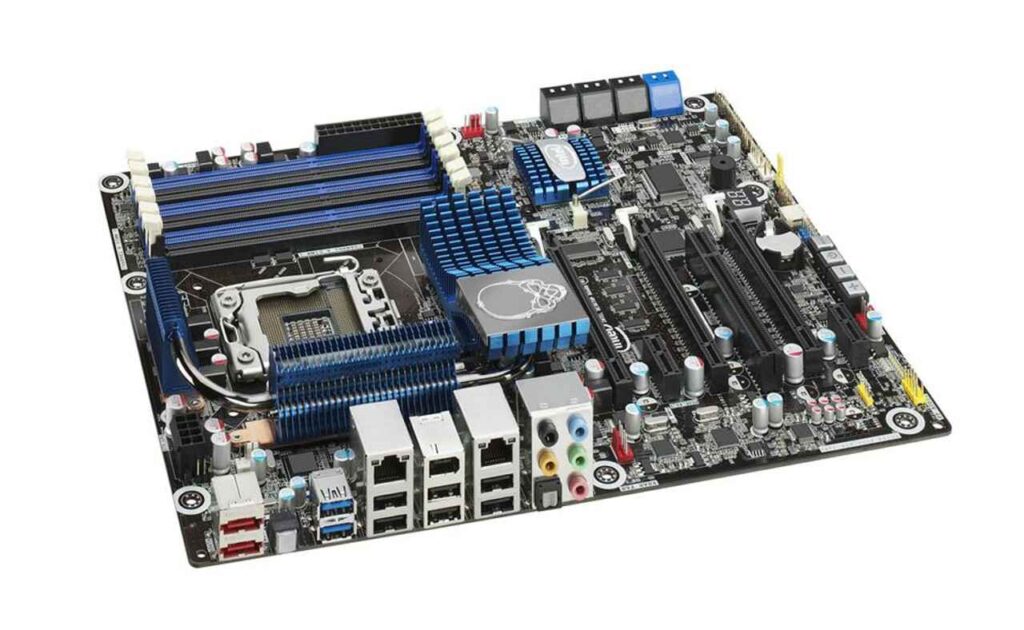
The CPU socket is a critical hardware component located on the motherboard that houses the processor. It serves as the connection interface between the CPU and the rest of the system. The socket ensures data and power are transferred efficiently between the CPU and other components.
There are three main types of CPU sockets:
- PGA (Pin Grid Array) – Pins are located on the CPU, and the socket has holes (used by AMD AM4, AM5).
- LGA (Land Grid Array) – Pins are located on the socket, and the CPU has flat contact pads (used by Intel).
- BGA (Ball Grid Array) – The CPU is soldered directly to the motherboard (used mostly in laptops).
Modern motherboards come with lever-based locking mechanisms that secure the CPU in place, ensuring stability and consistent connectivity.
When you install a CPU, always make sure:
- The socket type matches exactly.
- You apply thermal paste properly.
- You attach a compatible cooler for heat management.
A mismatched socket or forced installation can damage both the CPU and motherboard, leading to costly repairs.
What Is Socket AM4?
Socket AM4 is one of AMD’s most popular and longest-supported CPU sockets. Introduced in 2016, it supported multiple generations of Ryzen CPUs — from 1st Gen Ryzen to 5000 Series — making it a legendary platform for budget and gaming PCs alike.
Key Features of AM4 Socket
- Supports CPUs built on Zen, Zen+, Zen 2, and Zen 3 architectures.
- Compatible with DDR4 memory and PCIe 3.0/4.0 (depending on motherboard chipset).
- Works with chipsets such as A320, B450, B550, X470, and X570.
- Uses PGA socket design, meaning the pins are on the CPU.
Although AM4 has reached its end of life, it remains widely used due to its excellent performance and affordability. Many users still prefer AM4 systems for gaming or productivity because of the vast CPU support range and affordable upgrade path.
If you’re planning for a future-proof build, however, upgrading to N4 (AM5) is the way forward — it brings DDR5 support, PCIe 5.0, and improved power delivery.
What Are Two Types of CPU Sockets?
There are primarily two main types of CPU sockets found in modern motherboards: PGA and LGA.
1. PGA (Pin Grid Array)
- Commonly used by AMD processors (AM4, AM5).
- The pins are on the CPU, and the socket has matching holes.
- Offers easy installation but requires careful handling to avoid bent pins.
2. LGA (Land Grid Array)
- Used by Intel and some future AMD designs.
- The pins are on the socket, and the CPU has contact pads.
- More durable and ideal for frequent CPU upgrades.
Both types have their own advantages:
- PGA sockets are cost-effective and allow simpler manufacturing.
- LGA sockets provide better power delivery and stability for high-end processors.
Newer sockets like N3 and N4 are designed to support the latest features — including AI cores, faster PCIe lanes, and DDR5/DDR6 memory — setting the foundation for next-generation computing.
Conclusion:
The motherboard socket is the foundation of your computer’s performance and compatibility. Whether it’s N3, N4, AM4, or LGA 1700, understanding your socket type helps you choose the right CPU, memory, and components that deliver the best performance for your needs.
As of 2025, the battle between AMD N4 and Intel N3 platforms defines the cutting edge of desktop computing — offering higher efficiency, AI capabilities, and better gaming potential.
If you’re building or upgrading your system:
- Identify your motherboard’s socket type.
- Choose a CPU designed for that socket.
- Make sure the RAM and GPU are compatible with the platform.
By staying updated on socket technologies, you’ll ensure your PC stays powerful, efficient, and ready for the future.
Frequently Asked Questions (FAQs)
1. How do I find out what socket my motherboard has?
You can easily check your motherboard socket type by using a free tool like CPU-Z or Speccy. These programs display your CPU model and socket information instantly. Alternatively, you can look up your motherboard model on the manufacturer’s website and check the specifications section for the socket type.
2. Is N4 better than AM4?
Yes, the N4 socket (AM5 platform) is a major upgrade from AM4. It supports DDR5 RAM, PCIe 5.0, and new-generation Ryzen 7000 and 8000 processors, delivering faster performance and improved efficiency. AM4, on the other hand, uses DDR4 memory and supports older Ryzen CPUs, making it a great budget option but not as future-proof.
3. Can I use an AM4 CPU in an N4 motherboard?
No, AM4 CPUs are not compatible with N4 (AM5) motherboards. The sockets have different pin layouts and power delivery systems. If you want to upgrade to N4, you’ll need a new CPU, motherboard, and DDR5 RAM since AM4 components won’t fit or function correctly on the newer platform.
4. What CPUs are compatible with the N4 socket?
The N4 socket supports AMD’s Ryzen 7000 and 8000 series processors, built on the Zen 4 and Zen 5 architectures. These CPUs offer enhanced AI performance, energy efficiency, and support for PCIe 5.0 and DDR5 memory. AMD also plans to extend socket support for future Zen generations, ensuring long-term compatibility.
5. What is the latest CPU socket for Intel processors?
As of 2025, the latest Intel socket is the N3 (LGA 1851). It supports Intel Core Ultra 200 Series CPUs and uses DDR5 memory with next-gen integrated graphics. This socket replaces LGA 1700 and focuses on AI-driven computing, better thermal efficiency, and faster communication speeds.
6. Can I upgrade my motherboard socket?
Technically, no — you can’t upgrade just the socket because it’s permanently built into the motherboard. To move to a newer socket (like AM4 → N4 or LGA 1700 → N3), you’ll need to replace the entire motherboard and possibly upgrade your CPU and RAM to match the new platform.
7. What’s the difference between LGA and PGA sockets?
The main difference is where the pins are located:
- LGA (Land Grid Array): Pins are on the motherboard socket (used by Intel).
- PGA (Pin Grid Array): Pins are on the CPU itself (used by AMD).
LGA sockets are more durable and suitable for frequent upgrades, while PGA sockets are simpler but require careful handling to avoid bent pins.
8. Which socket is best for gaming in 2025?
Both AMD N4 (AM5) and Intel N3 (LGA 1851) sockets deliver outstanding gaming performance. However, AMD’s N4 socket is known for long-term platform support, making it a great choice for gamers who plan future CPU upgrades. Intel’s N3 excels in single-core performance and AI-boosted gameplay, making it ideal for high-end gaming PCs.
9. How long will the N4 socket last?
AMD has officially announced that the N4 (AM5) socket will receive support until at least 2027, possibly longer. This means future Ryzen processors will continue to use the same socket, allowing you to upgrade CPUs without changing the motherboard — similar to how AMD supported AM4 for nearly seven years.
10. Do all CPUs fit in any motherboard?
No, CPUs are not universal. Each CPU model is designed for a specific socket type. Installing a CPU into an incompatible socket can damage both the CPU and motherboard. Always check the socket type (e.g., AM4, N4, LGA 1700, or N3) before buying a processor or motherboard.