
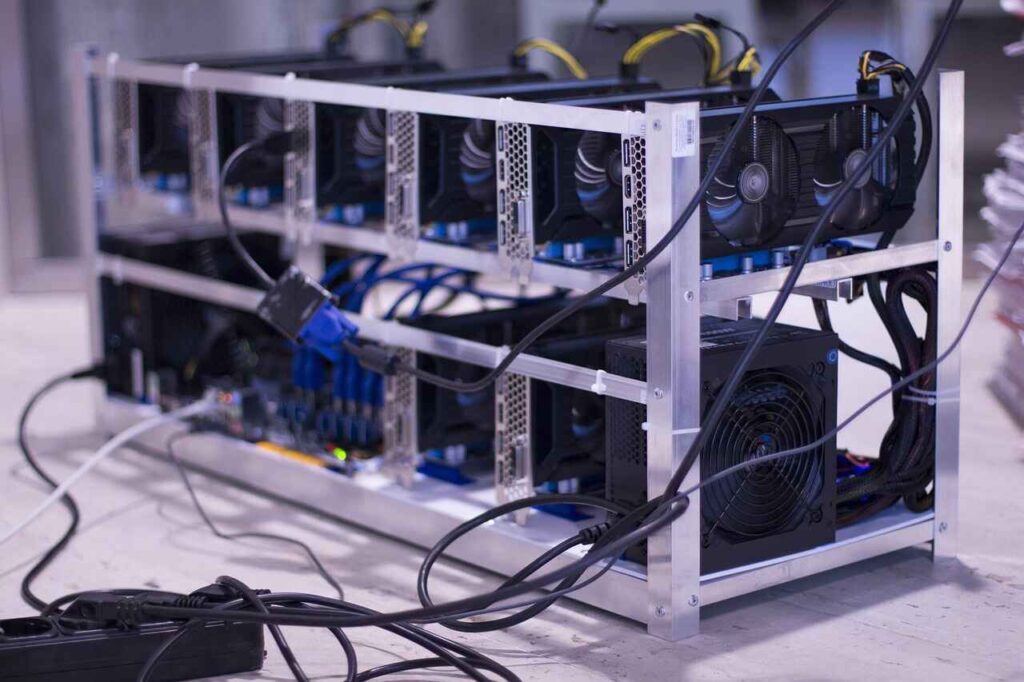
In today’s high-performance computing era, virtualization has become the foundation of both business and personal computing environments. Whether for developers, IT professionals, or creative users, having a reliable system that supports GPU passthrough is crucial. The QNAP 453D virtualization GPU passthrough setup is emerging as one of the best solutions to maximize your hardware efficiency and achieve near-native performance in virtual environments.
Understanding QNAP 453D Virtualization GPU Passthrough
The QNAP 453D is a compact 4-bay NAS powered by the Intel Celeron J4125 Quad-Core processor, supporting up to 8GB DDR4 memory. Beyond its storage capabilities, it excels as a virtualization-ready NAS that allows users to create and manage virtual machines through QNAP Virtualization Station.
When combined with GPU passthrough, this NAS enables VMs to directly access GPU hardware resources. The result? High-speed graphics processing, smoother workloads, and an efficient virtualization setup capable of running multiple operating systems and demanding GPU-based applications.
Whether you’re hosting AI models, video editing projects, or 3D rendering tasks, QNAP 453D virtualization GPU passthrough ensures you get performance close to a native desktop setup.
Why GPU Passthrough Matters for Virtualization
GPU passthrough lets a virtual machine use a physical GPU instead of a simulated one. This direct access eliminates performance bottlenecks, allowing your VMs to run graphic-intensive or computation-heavy workloads smoothly.
Using QNAP 453D virtualization GPU passthrough, you can:
- Run Windows or Linux VMs with full GPU acceleration
- Perform AI model training, video rendering, or media transcoding
- Utilize GPU for hardware encoding via QNAP’s hardware transcoding engine
- Create a mini workstation that handles professional-grade computing tasks
For both home labs and business environments, this feature turns the QNAP 453D into a cost-effective virtualization server.
How to Setup a Virtual Machine with GPU Passthrough
Setting up QNAP 453D virtualization GPU passthrough involves a few technical but manageable steps. Follow these to achieve the best results:
1. Install QNAP Virtualization Station
- Go to App Center on your QNAP NAS.
- Search and install Virtualization Station.
- This application allows you to create and manage virtual machines easily.
2. Install a Compatible GPU
The QNAP 453D includes a PCIe Gen 2 x2 slot. Install your NVIDIA or AMD GPU into this slot and ensure proper power connection.
3. Configure GPU in QNAP
- Open Control Panel → Hardware → PCIe Device.
- Check that your GPU is recognized.
- Assign the GPU to passthrough mode in Virtualization Station.
4. Create a New Virtual Machine
- Click “Create VM” in Virtualization Station.
- Choose your preferred OS (e.g., Windows 10, Ubuntu).
- Allocate CPU cores, RAM, and attach the GPU device under Hardware Settings.
5. Install Drivers and Test
After creating the VM:
- Install the latest GPU drivers inside the virtual machine.
- Use GPU-Z or Device Manager to verify passthrough success.
- Run a test like Cinebench or FurMark to confirm GPU acceleration.
How to Turn On GPU Passthrough
To enable GPU passthrough, you’ll need to activate virtualization support in the BIOS:
- Connect a keyboard and monitor to your NAS.
- Enter BIOS by pressing Del during boot.
- Navigate to Advanced > CPU Configuration > Intel VT-d.
- Enable VT-d (Intel Virtualization for Directed I/O).
- Save and reboot your QNAP NAS.
Once enabled, you can assign the GPU directly to your virtual machines through the QNAP interface, completing your QNAP 453D virtualization GPU passthrough setup.
Which Hypervisors Allow GPU Passthrough?
Several hypervisors support GPU passthrough, but compatibility depends on drivers and hardware. The best choices for the QNAP 453D virtualization GPU passthrough include:
| Hypervisor | GPU Passthrough Support | Compatibility with QNAP |
|---|---|---|
| QNAP Virtualization Station | ✅ Full | ✅ Seamless |
| VMware ESXi | ✅ Supported | ⚠️ Manual Configuration |
| Proxmox VE | ✅ Excellent | ✅ Advanced Users |
| Citrix XenServer | ✅ Partial | ⚠️ Limited GPUs |
| Hyper-V | ⚠️ Basic | ⚠️ Requires DDA Setup |
While QNAP Virtualization Station provides the easiest and most stable option, power users might experiment with Proxmox or VMware ESXi for fine-tuned control.
How to Enable Graphics Virtualization
Enabling graphics virtualization allows multiple virtual machines to share GPU resources — ideal for multi-user environments.
Steps:
- Ensure your GPU supports SR-IOV or vGPU (Virtual GPU).
- Open Virtualization Station → Device Management → GPU Settings.
- Enable vGPU Sharing mode.
- Assign specific GPU resources to individual VMs.
This ensures optimal performance and efficient GPU resource utilization in a QNAP 453D virtualization GPU passthrough setup.
Does NVIDIA Allow GPU Passthrough?
Yes, NVIDIA officially supports GPU passthrough for its Quadro, RTX, and Tesla series GPUs. However, consumer GPUs like GeForce might require extra configuration or modified drivers.
For QNAP 453D virtualization GPU passthrough, the following GPUs are known to work effectively:
- NVIDIA Quadro P2000 / P4000
- NVIDIA GTX 1050 / 1650
- AMD Radeon RX 550 / RX 560
These GPUs provide excellent performance for transcoding, virtualization, and AI workloads within your NAS environment.
Performance Benefits of QNAP 453D Virtualization GPU Passthrough
By implementing GPU passthrough, users gain several critical performance benefits:
- Native GPU performance within virtual machines
- Faster transcoding and video rendering
- Reduced CPU workload through GPU offloading
- Enhanced AI computation for deep learning
- Energy-efficient operation for 24/7 workloads
This setup provides the perfect balance between performance, cost-efficiency, and scalability, especially for small businesses, developers, and digital content creators.
Real-World Applications
- AI & Machine Learning: Run TensorFlow or PyTorch directly inside a GPU-accelerated VM.
- 3D Rendering: Design with tools like Blender or Maya in a VM.
- Video Production: Transcode or edit 4K footage using hardware-accelerated encoding.
- Gaming VMs: Host and stream games via Windows-based virtual machines.
- Virtual Desktop Infrastructure (VDI): Provide multiple GPU-enhanced desktops on one NAS.
Conclusion
The QNAP 453D virtualization GPU passthrough configuration is a game-changer for professionals and enthusiasts seeking high-performance virtualization in a compact NAS solution. Its combination of Intel power, PCIe expandability, and Virtualization Station integration allows you to create GPU-accelerated VMs for work, research, or entertainment.
By leveraging GPU passthrough, your QNAP 453D becomes a powerful all-in-one workstation, capable of handling demanding applications efficiently while maintaining reliability and energy efficiency. It’s the perfect choice for anyone looking to combine storage and virtualization in one robust platform.
FAQs
1. What is the best GPU for QNAP 453D virtualization GPU passthrough?
The NVIDIA Quadro P2000 and AMD Radeon RX 550 are ideal choices due to their reliability and virtualization support.
2. Can I use multiple GPUs in QNAP 453D?
No, the QNAP 453D supports only one GPU through its single PCIe slot.
3. Is GPU passthrough suitable for AI workloads?
Yes, QNAP 453D supports AI frameworks like TensorFlow or PyTorch via GPU passthrough.
4. Does GPU passthrough affect NAS performance?
Slightly, but with proper configuration and resource allocation, performance remains stable and efficient.
5. Can I use GPU passthrough for Plex on QNAP 453D?
Absolutely. GPU passthrough enables hardware-accelerated transcoding for smoother Plex streaming.